AoH’s Board of Directors is a prestigious group of stakeholders that provides expertise, insights, and financial resources to support learners as they pursue their goals both inside and outside the classroom.
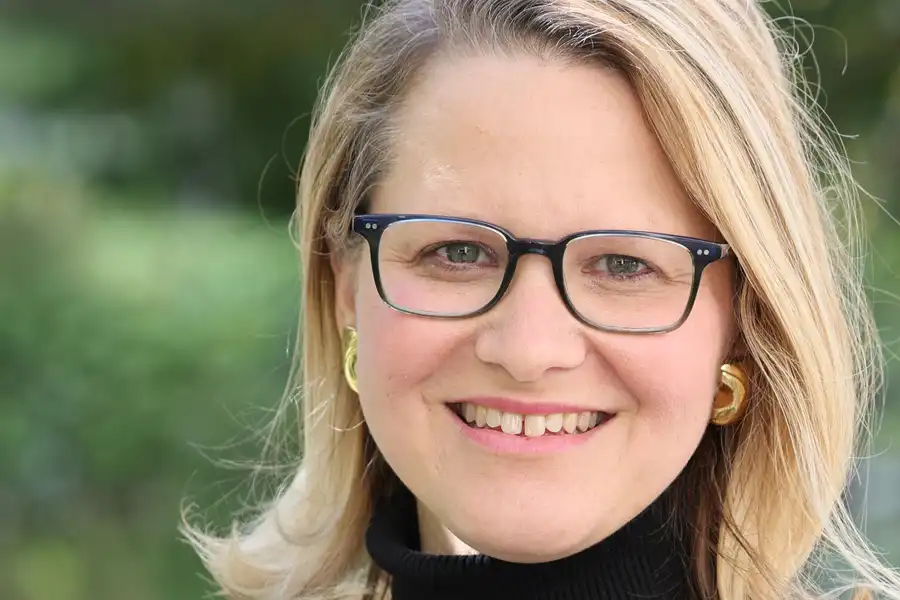
Nora Abramson, Board Trustee, brings over 15 years of experience in developing, implementing, and scaling organizational, educational, and policy programs. Her passion for education—especially charter schools—began at Columbia University while earning her bachelor’s degree.
“The high school next to Columbia had a graduation rate of around 4%, which was criminal that it had gotten to that point. It was shocking because you have Columbia University, this beautiful, gated, Ivy-league school literally two blocks away from this high school … But most of my mom’s family had graduated from New York City public schools and it had been this incredible stepping stone to their success and to get out of poverty, so it was fascinating because it hadn’t been that long ago.”
Nora and her friends would create a club to support the students attending the high school. The club would connect students with New York Regents Examinations, the state-mandated high school achievement tests, to improve their scores and learn about scholarships. They’d go on hikes, as well.
While interacting with the students, she felt as if the public school system had failed. How could millions move to go to college in New York City, while the city’s own couldn’t even make it past high school? She predicted other cities probably faced the same problem. So, when she was offered her first post-graduate position to solve this issue in San Francisco, she gladly accepted. As Community Relations Manager at Envision Education, she fundraised and opened charter schools in the Bay Area until 2005.
In 15 years, Nora helped to launch five new charter schools, managed school district-wide policy change initiatives, and supported nonprofit organizations through making substantive changes to the way they evaluate and design programs. Back in the city, she’d become one of the directors at the New York City Department of Education (NYCDOE) Office of School Quality, and prior to that, a Director within the NYCDOE Office of Innovation (NYC iZone). There, she focused on growing and designing programs and public policies with empathy, which focused on the lifelong socio-emotional, academic, and professional skill building of young people.
She’d hear about AoH from colleague and former board member Madi Ford. Though she had never served adult learners before, her family’s story, once again, inspired her to get involved. Her maternal grandparents fled to the United States to escape a genocide in Ukraine, which severely limited their access to education. While they themselves were unable to benefit from public schooling, they took great pride in seeing their children pursue and graduate from college.”
“That always drove me to think about adult education.”
In 2021, Nora would join the board. As a trustee, she promotes AoH in her networking and has been active in two committees: the Strategic Planning Committee and the Real Estate and Finance Committee. With her current position as Chief Strategy Officer at the Tower Companies and previous work in education reform, she utilizes her experience to consult on AoH’s professional and property development in these committees.
Since her arrival in 2021, she has helped double the amount of fundraising for the foundation. Her fundraising effort has not only helped AoH support community needs but has also allowed for expansion across the region. For instance, Nora assisted in securing a third location in D.C. and preparing for launch in Baltimore.
While AoH is no stranger to rapid expansion and change, Nora’s goal is to continue promoting “smart growth” to ensure the mission and talent don’t get lost in the district. Enhancing high school pathways and workforce training may help.
“The skilled labor force is very compromised in the DMV … We have lost a lot of skilled labor to the south, where it is much cheaper to live … and so the demand is high. I think if local Washingtonians can fill that demand, that is a blessing for the city … So, I think to build toward that skilled labor force, whether it’s in property management, in medicine, culinary, or any of the above, I think all of those are honestly a solid foundation for adult education at this moment.”
Nora says expanding workforce training is key to economic mobility and narrowing D.C.’s wealth gap. She notes that the city’s reliance on an imported workforce often sidelines local adult education, even though accessible, high-quality training could enable residents to fill these jobs, earn higher wages, and transform their communities—a model she believes could have changed her own family’s future.