As we celebrate Black History Month, it’s important to recognize the importance of Historically Black colleges and universities (HBCUs). HBCUs have played a vital role in transforming the Black community, shaping the societal narrative, and molding the historical figures we honor today.
All 107 of these institutions were built before the Civil Rights Act of 1964 and served Black individuals who were excluded from most educational opportunities. While today, HBCUs are open to all races, 35% of Black graduates earned their bachelor’s degrees from these schools.
They’re known for their strong sense of community and belonging, providing a safe space for Black students victimized by stereotypes or who are looking to build racial pride. To build that safe space, systemic barriers, like racial inequity and economic hardship, are addressed and conquered. In return, Black HBCU graduates are twice as likely to graduate from college as those who attend non-HBCUs.
Regarding financial pressures, HBCUs are a pathway towards economic mobility. HBCUs tend to cost less than their counterparts to promote accessibility. Additionally, 70% of their students are eligible for the Pell Grant, a federal grant for students from low-income backgrounds to help them afford their education. This translates to roughly $6,000 a year many learners keep in their pockets, making higher education more financially accessible. Yet, six years after they graduate, “HBCU graduates surpass their family income level”, a life-changing transformation. Both factors help first-generation college students and adults returning to school, who statistically come from lower-income families, secure their education equally with their peers.
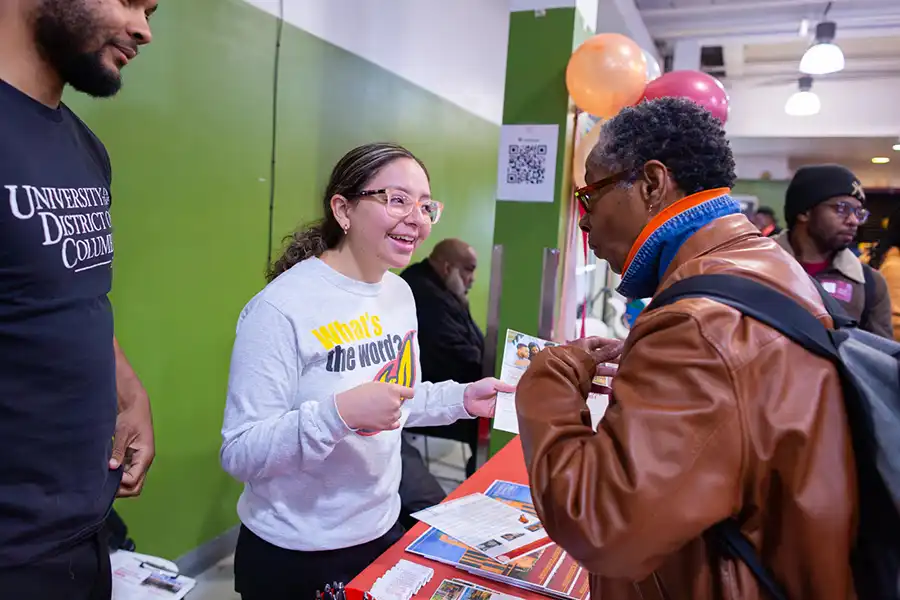
There are two HBCUs in Washington, D.C.: Howard University and The University of the District of Columbia (UDC). Howard University is a prestigious, private research university and is the second-largest HBCU in the country. It is known for its doctoral programs and is classified as a “R1” research-intensive university. UDC is a public university offering several degrees and certifications to students. They even have a community college branch for those looking to earn their associate’s degree.
The two schools offer a variety of programs for learners at the Academy of Hope (AoH) who want to progress to higher education. There are several programs in in-demand industries that allow an AoH workforce certification as a prerequisite (CompTIA, Medical Billing & Coding, Project Management, Phlebotomy Technician Training, and Nurse Aid Training). Advanced training for these roles is also available. In fact, HBCUs produce over 25% of Black graduates with degrees in STEM.
AoH learners earning their high school diploma (GED or National External Diploma Program (NEDP)) or who are actively pursuing their workforce certification can dual-enroll at college. Dual-enrollment lets learners work for their AoH certification and college credits simultaneously, cutting the cost and time it takes to receive a postsecondary degree.
Those interested in dual enrollment or continuing their education after AoH can connect with the College Navigator Thomas Webb to learn more about their options. Enrolling in college can be stress-free, as Thomas helps learners during every step of the college application and financial aid process. College preparation, like college tours or his 21st Century College and Career course, is offered to learners as they make their decision.
For generations, Black learners have encountered systemic barriers that limit access to education. Academy of Hope is grounded in a commitment to racial equity, creating an environment where honoring African American heritage supports both educational achievement and economic mobility. Historically Black Colleges and Universities offer a similar foundation, making them strong pathways for AoH learners pursuing higher education.