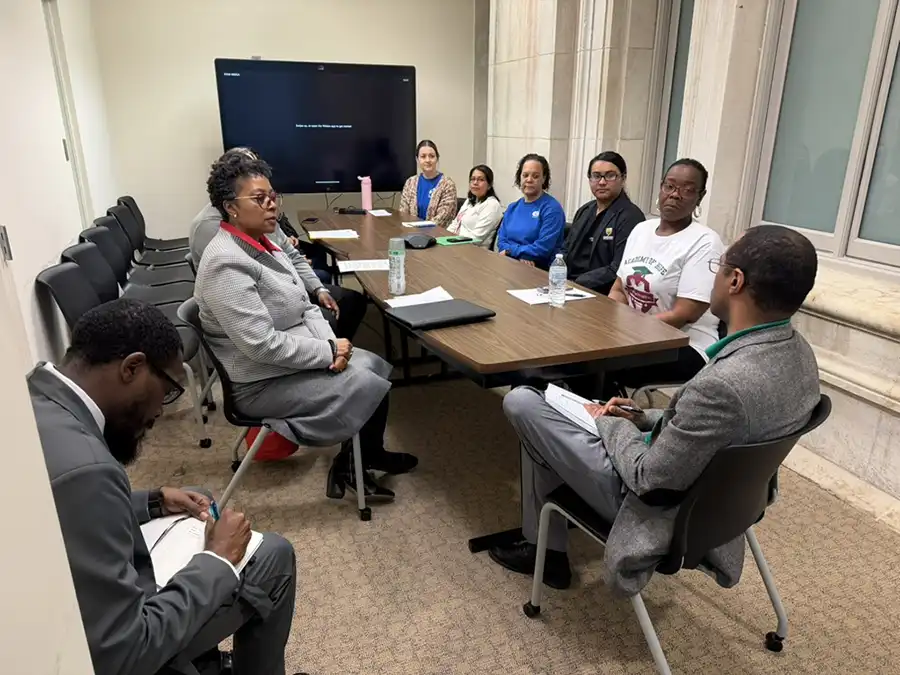
On February 11, Academy of Hope (AoH) joined fellow adult public charter schools at the Council of the District of Columbia to advocate for policy priorities that directly impact more than 5,000 adult learners across all eight wards. As federal workforce funding faces potential reductions, protecting and strengthening local adult education investments is more critical than ever.
Learners and staff emphasized this benefit to all 13 Councilmembers, the Mayor’s Office of Community Affairs, the Deputy Mayor for Health and Human Services, and the Deputy Mayor for Education. During their visit, they also discussed priorities that would help contribute to the success of adult education in Washington, D.C., and the city’s economy and communities.
Increase the Adult Funding Weight — or Create a Targeted Grant
Adult learners face distinct barriers—work schedules, caregiving responsibilities, trauma histories, and unmet disability needs—and require specialized instructional models and support. Adult public charter schools do not receive special education or at-risk funding, despite serving learners with significant support needs. By increasing the adult funding weight, we can further support adult learners who require accommodations.
This request is especially urgent given the potential loss or reduction of federal workforce funding, including Workforce Innovation and Opportunity Act (WIOA) funds and the District’s Adult and Family Education (AFE) local match.
Increase the Adult Learner Transportation Subsidy to $100/Month
We continued our fight for the Adult Learner Transportation Subsidy Program (ALTS), requesting to increase the subsidy from $70 to $100 a month. Transportation costs are a leading barrier to attendance and persistence. Many adult learners commute during peak fare hours, make multiple daily trips for work and caregiving, and exhaust current subsidies early in the month. A modest increase would directly improve attendance, retention, and completion.
Maintain the Social Safety Net for DC Residents
Adult learners rely on a stable safety net to meet basic needs while pursuing education and training. Federal assistance programs like Temporary Assistance for Needy Families (TANF), Supplemental Nutritional Assistance Program (SNAP), and Medicaid need to be protected. When the SNAP program was unexpectedly cut in November, many adult learners were forced to set their education aside as they scrambled to put food on the table for their families. While AoH mobilized internal resources and community support to assist affected learners, public systems must remain stable and reliable to ensure residents can pursue education without interruption.
Conclusion
AoH learners and staff had the opportunity to discuss these priorities further on Ward 5 Councilmember Zachary Parker’s podcast, The Ward 5 Wave. By sharing these requests on a grander scale, we hope the community will join us in our advocacy efforts to not only enhance adult education but also create a better city for us all.